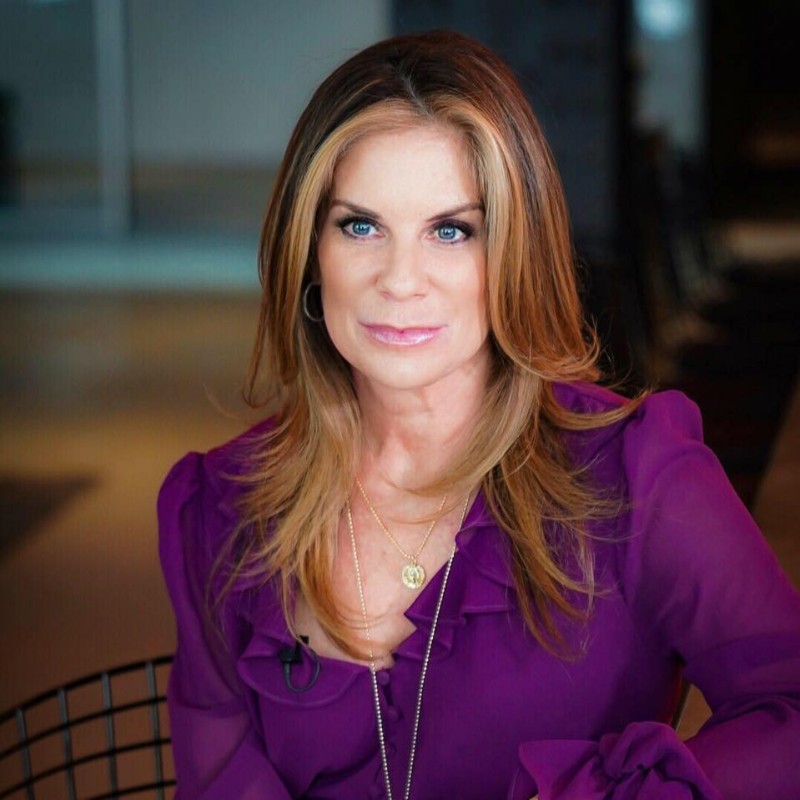
As a little girl, she rewrote books into plays and documented camp rule-breakers like a professional reporter, listing names, ages, and offenses as if they were headlines. Long before she ever stepped into a television studio, she was already practicing journalism.
Carol Anne Riddell majored in English at Tufts University, where her passion for reading and writing shaped her early ambitions. Riddell then earned a Master of Science in Journalism from Northwestern University’s Medill School of Journalism, which further developed her reporting and storytelling skills. That foundation, combined with a belief in the craft of visual storytelling, made broadcast and television journalism seem like a natural fit.
That instinct to tell stories eventually led Riddell into New York’s fast-paced news industry at New York 1 News, the city’s 24-hour cable news channel, where she worked as a reporter, host, and anchor. She focused on education and then later expanded into government coverage and reporting in other areas. Riddell later joined WNBC-TV, where she continued reporting and eventually became a weekend anchor.
Through reporting on New York City’s school system, she developed a commitment to public education. That led her to CUNY TV, CUNY’s public educational television station. Riddell said she valued the station’s mission and its focus on long-form journalism.
At the station, she hosts “Book It,” a monthly series of interviews with authors, and “Arts in the City,” a magazine-style show focused on culture and entertainment.
The transition from breaking news has been both a departure and a reward, she said.
“It’s a different muscle,” she said, noting that while the format has changed, the core principles of journalism remain the same.
Riddell spent years working with motivated Hunter interns at CUNY TV and guest lecturing at Hunter. Riddell said she was struck by their determination and drive.
This semester, Riddell joined the faculty to help students become more critical news consumers. She teaches a discussion section of MEDIA 211 News Literacy in a Digital Age, where students analyze various forms of media and evaluate their credibility. Her class emphasizes writing, revision, and understanding what makes journalism credible and ethical.
“It’s been incredibly rewarding,” she said, adding that teaching has pushed her to think about her work and her career in a more reflective, academic way.
Despite decades in the industry, Riddell tells students that journalism is a highly competitive industry, where mistakes are inevitable, but learning from them is essential to moving forward.
“If you know you love it and this is what you really want to do, don’t be deterred by people who tell you it’s impossible to break into,” Riddell said.
Riddell will not teach at Hunter College next semester because of scheduling conflicts, but she hopes to return in the future.
“I would like to get involved in other classes focused on visual storytelling,” she said. “News Literacy is terrific, and I would like to teach it again, but I am also interested in the television side of the journalism curriculum.”
Riddell traces her path in journalism back to childhood instincts she did not yet have language for.
“I was at my mother’s house and found letters I had written from camp,” she said. In them, she recalled, she documented incidents she had observed and heard around camp. “Susie Smith, age 16, suspended for smoking … Susie Smith, age 15, suspended for being on the boy’s side of camp.”
Looking back, Riddel can see how that instinct to document led her to where she is today. “I was doing it the way a journalist would, without knowing that’s what I was doing,” she said.
For more of Riddell’s work, visit her CUNY TV profile.